
Across India’s farmlands, a silent transformation is taking place — not only through advanced farming techniques, but through the materials supporting them. Steel has become an essential foundation for modern agriculture, enabling stronger infrastructure, efficient machinery, and long-lasting solutions that help farmers scale sustainably.
As India moves toward technology-driven and climate-resilient agriculture, the steel industry in India plays a crucial supporting role. From basic farm tools to large storage systems, steel offers durability, flexibility, and cost efficiency — making it a preferred material for agricultural development.
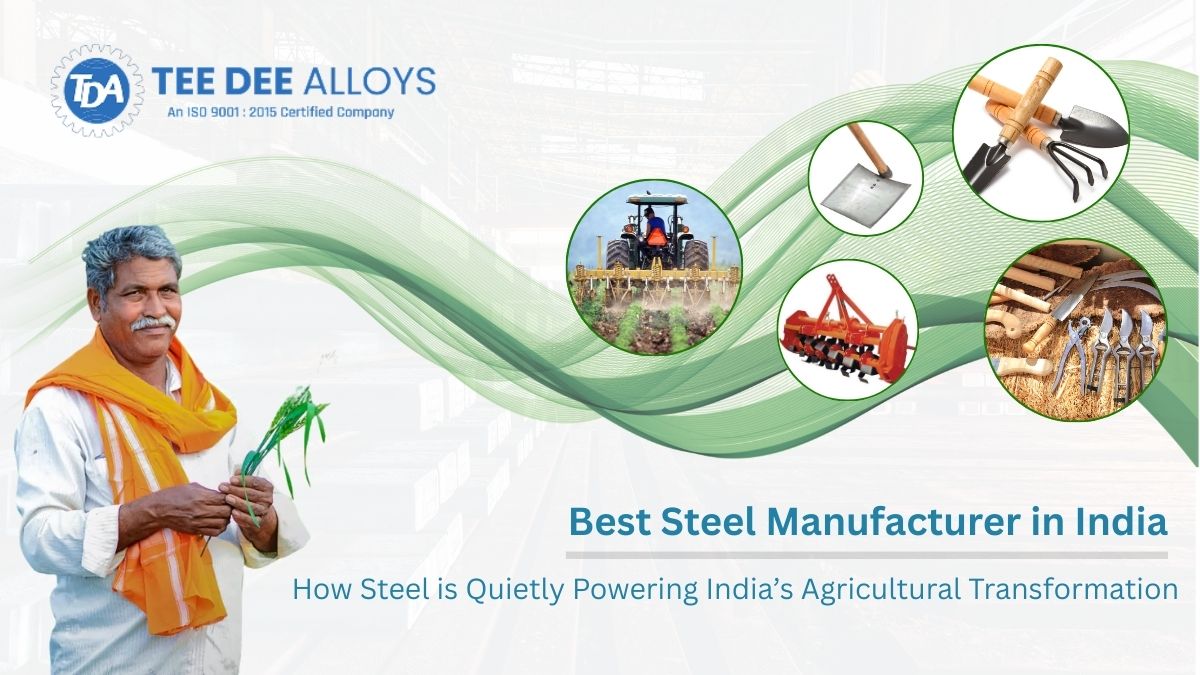
Let’s explore how steel is reshaping Indian agriculture and how manufacturers like Tee Dee Alloys, based in Punjab, are contributing to this evolving ecosystem.
The Expanding Role of Steel in Indian Agriculture
Agriculture today is no longer dependent solely on traditional methods. Mechanization, precision tools, and improved infrastructure are becoming essential to meet rising food demands and changing environmental conditions.
Steel supports this shift by providing strength and reliability across agricultural operations. It withstands extreme weather, heavy loads, and continuous usage — making it ideal for farming environments where durability is critical.
Another advantage lies in its adaptability. Steel can be easily fabricated, welded, and customized, allowing agricultural equipment manufacturers and infrastructure developers to design application-specific solutions.
Where Steel is Used Across Agricultural Operations
Steel is present at nearly every stage of the agricultural lifecycle.
Agricultural Equipment & Machinery
Tractors, harvesters, seed drills, and ploughs rely on steel bars and billets for frames, shafts, and structural components. These parts require consistent strength and dimensional accuracy to perform reliably under pressure.
Greenhouses & Farm Structures
Steel-based sheds, storage units, and greenhouse frames provide long-term stability and resistance against wind, heat, and moisture, especially in challenging climates.
Storage & Post-Harvest Infrastructure
Grain silos, cold storage units, and transport containers made from steel help preserve produce quality after harvesting, reducing losses and improving supply-chain efficiency.
Irrigation & Water Management Systems
Steel pipes, channels, and support frames form the backbone of large irrigation projects, ensuring consistent water flow and long operational life.
Fencing & Crop Support Systems
Mild steel flats, rods, and sections are commonly used for fencing, trellising, and plant support structures, offering strength with minimal maintenance.
Indian Steel Manufacturers Supporting Agricultural Growth
Over the years, steel manufacturers in India have evolved from producing standard-grade materials to offering customized solutions tailored for sector-specific needs — including agriculture.
States like Punjab, Haryana, and Maharashtra, where agriculture and industry operate closely, have seen significant advancements in steel production. Manufacturers in these regions understand agricultural demands and supply materials designed for performance, consistency, and scalability.
This synergy between agriculture and steel manufacturing has helped improve farm productivity while supporting the growth of agri-equipment industries.
Tee Dee Alloys: Supporting Agricultural Steel Needs
Operating from Punjab, Tee Dee Alloys contributes to this ecosystem by supplying quality steel products used across agricultural and industrial applications. With a focus on consistency, precision, and reliable supply, the company supports manufacturers and fabricators serving the agricultural sector.
Products such as MS billets, round bars, and flat bars play an important role in machinery manufacturing, infrastructure development, and custom agricultural fabrication. By maintaining quality standards and timely delivery, Tee Dee Alloys helps ensure dependable performance across applications.
Final Thoughts
India’s agricultural landscape is evolving — and steel remains central to this progress. From strengthening farm infrastructure to enabling modern machinery, steel provides the foundation for long-term agricultural growth.
As the steel industry continues to innovate and align with agricultural needs, collaborations between farmers, manufacturers, and suppliers will become even more important. With experienced steel producers supporting this journey, Indian agriculture is well-positioned for a stronger, more sustainable future.
Frequently Asked Questions (FAQs)
Q1. Why is steel important in agriculture?
Steel offers durability, strength, and low maintenance, making it ideal for farming equipment, infrastructure, and storage systems.
Q2. Which steel products are commonly used in agriculture?
Round bars, flat bars, billets, pipes, and structural sections are widely used in machinery, fencing, sheds, and irrigation systems.
Q3. Does steel help reduce long-term farming costs?
Yes. Steel structures last longer and require fewer repairs, helping farmers reduce maintenance and replacement expenses.
Q4. Is steel suitable for outdoor agricultural conditions?
Absolutely. Properly manufactured steel performs well under harsh weather, heavy loads, and continuous outdoor exposure.